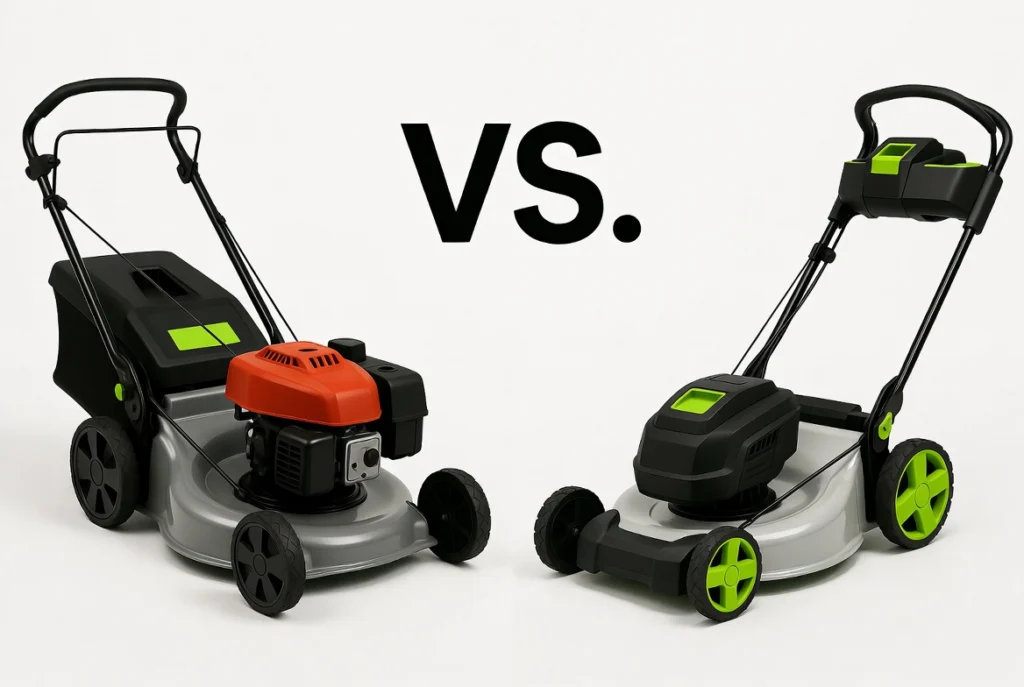
Choosing between gas vs battery outdoor power equipment is one of the most common questions we hear at Librandi Outdoor Power. Customers walk in ready to buy a trimmer or blower and want an honest answer about which power source is better. The truth is that it depends entirely on how you plan to use the equipment, the size of your property, and your tolerance for maintenance. Here is a straightforward comparison based on what we see every day in the shop.
Comparing Gas vs Battery Outdoor Power Equipment: Key Factors
There are five primary factors that determine which power source makes more sense for any given buyer: runtime, power output, maintenance burden, noise levels, and total cost of ownership. Importantly, no single power source wins in all five categories, which is why both continue to sell well. Let us break each factor down honestly.
When Gas Equipment Makes More Sense
Runtime and sustained power. Gas engines deliver consistent power output for hours without interruption. For example, a commercial landscaper running a mower all day cannot afford to stop and wait for batteries to recharge. For extended sessions, heavy-duty cutting, and demanding professional conditions, gas remains the practical standard.
Cold weather performance. In addition, gas equipment performs consistently in freezing temperatures, which matters here in North Idaho. Lithium-ion battery performance degrades significantly below 40 degrees Fahrenheit, reducing both runtime and available power output. Therefore, if you are clearing brush in November or cutting firewood in December, gas is the reliable choice.
Cost per unit of power. Furthermore, for commercial-grade mowers, chainsaws over 50cc, and backpack blowers, gas models still deliver more power per dollar of initial investment. The upfront cost of comparable battery-powered commercial equipment is significantly higher, and battery replacement costs add up over time.
When Battery Equipment Makes More Sense
Noise and neighborhood considerations. On the other hand, battery tools are dramatically quieter than gas equivalents. If you have close neighbors, early morning mowing restrictions, or noise-sensitive areas to maintain, battery is a clear advantage. According to the U.S. Environmental Protection Agency, small gas engines also produce disproportionate emissions compared to their size, which is another consideration for environmentally conscious buyers.
Convenience and low maintenance. Similarly, there is no fuel mixing, no oil changes, no spark plugs, no carburetor cleaning, and no winterization with battery equipment. You charge the battery, press a button, and go. For homeowners who use equipment a few times per month, that simplicity has real value. Our service team spends a significant amount of time fixing carburetors damaged by old fuel, a problem that simply does not exist with battery equipment.
Smaller residential properties. Moreover, modern lithium-ion batteries can easily handle a typical residential lawn of up to half an acre on a single charge. For a property that size with a trimmer and blower in the rotation, a battery system from a single brand with shared batteries is an efficient and cost-effective setup. The Outdoor Power Equipment Institute notes that battery platform adoption continues to grow year over year in the residential segment.
The Bottom Line on Gas vs Battery
In summary, if you mow commercially, run equipment for hours at a stretch, or work in cold conditions and demanding terrain, gas is still the practical choice. Conversely, if you maintain a residential property and value convenience, quiet operation, and minimal maintenance, modern battery technology is genuinely good and improving every year.
We carry both gas and battery powered outdoor power equipment from leading brands. Come by the shop and we will help you figure out what fits your situation. No pressure, just honest advice from people who know this equipment inside and out.
Not sure which way to go? Call us at (208) 772-4556 or contact us online and we will walk you through the options.