
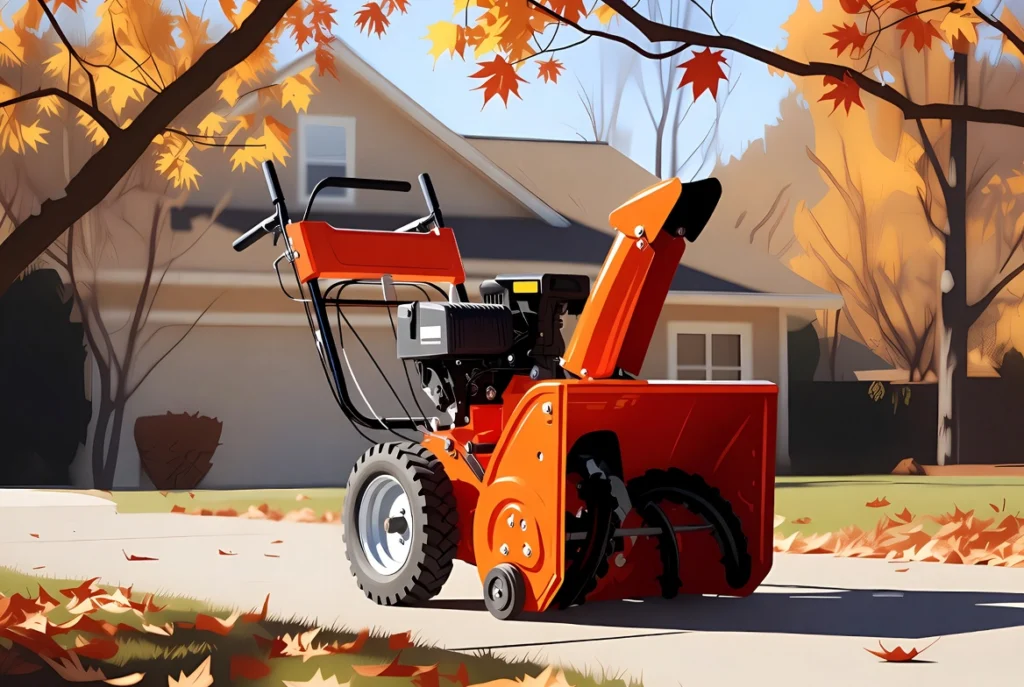
In North Idaho, the first serious snowfall can arrive without much warning. If you wait until there is six inches on the ground to pull out the snow blower, you are going to have a bad morning if it refuses to start. A snow blower pre-season checkup ensures your machine is ready to go before you actually need it. At Librandi Outdoor Power, we recommend completing these steps at least two weeks before the first expected snow so you have time to address any issues.
Snow Blower Pre-Season Step 1: Address the Fuel System
First and foremost, old fuel is the number one reason snow blowers fail to start when you need them most. If you left fuel in the tank from last winter without stabilizer, drain it completely. Then, refill with fresh gasoline and add a quality fuel stabilizer. Run the engine for 3 to 5 minutes to circulate treated fuel through the carburetor and fuel lines. However, if the engine is hard to start or runs rough after fresh fuel, the carburetor may need cleaning, which is a common and affordable service we perform in the shop.
Change the Engine Oil
Next, change the engine oil according to your owner’s manual specifications. Snow blowers work hard in cold, demanding conditions, and clean oil is critical for proper lubrication at low temperatures. Therefore, use a winter-weight oil if the manufacturer recommends it for your model. As a result, fresh oil also makes cold starts easier, which matters when you are clearing the driveway at 6 AM.
Inspect Belts and the Auger Assembly
In addition, check both the auger drive belt and the wheel drive belt for cracks, fraying, or glazing. A worn belt will slip under the heavy load of packed snow and reduce your throwing distance significantly. Furthermore, spin the auger by hand with the engine off to make sure it turns freely. If it is stiff, makes grinding noises, or does not turn at all, the gearbox or shear pins may need attention before the season.
Adjust Skid Shoes and Scraper Bar
Moreover, the skid shoes on the sides of the housing control how close the auger gets to the ground surface. Adjust them for the surface you clear most frequently. Specifically, set them higher for gravel driveways to avoid picking up rocks, and lower for smooth concrete surfaces for a cleaner scrape. Also check the scraper bar along the bottom edge of the housing. If it is worn down to the point where snow is passing underneath instead of being picked up, replace it before the season starts.
Stock Spare Shear Pins
Similarly, keep a set of spare shear pins and cotter pins in your garage where you can find them easily. Shear pins are designed to break on impact and protect the auger gearbox when the blower hits a hidden obstacle like a newspaper, a buried rock, or a frozen garden hose. We see this in the shop every season: using hardened bolts instead of proper shear pins is a common mistake that can result in a very expensive gearbox replacement when the auger hits something solid.
Do a Full Test Run
Finally, start the blower and let it run for 5 minutes to reach operating temperature. Test the auger engagement lever, the chute rotation mechanism, and the deflector adjustment. In addition, make sure the wheel drive engages and disengages smoothly in all speed settings. It is much better to discover a problem now than in the middle of a storm when every shop in town has a three-week backlog. The Outdoor Power Equipment Institute also recommends reviewing your owner’s manual for any model-specific snow blower pre-season procedures.
For more end-of-season storage advice that helps prevent snow blower pre-season problems in the first place, see our guide on winterizing your outdoor power equipment.
We service and repair all major snow blower brands. If yours needs work before the season, bring it in early. Our shop fills up fast once the snow starts flying. Call (208) 772-4556 or contact us online.