
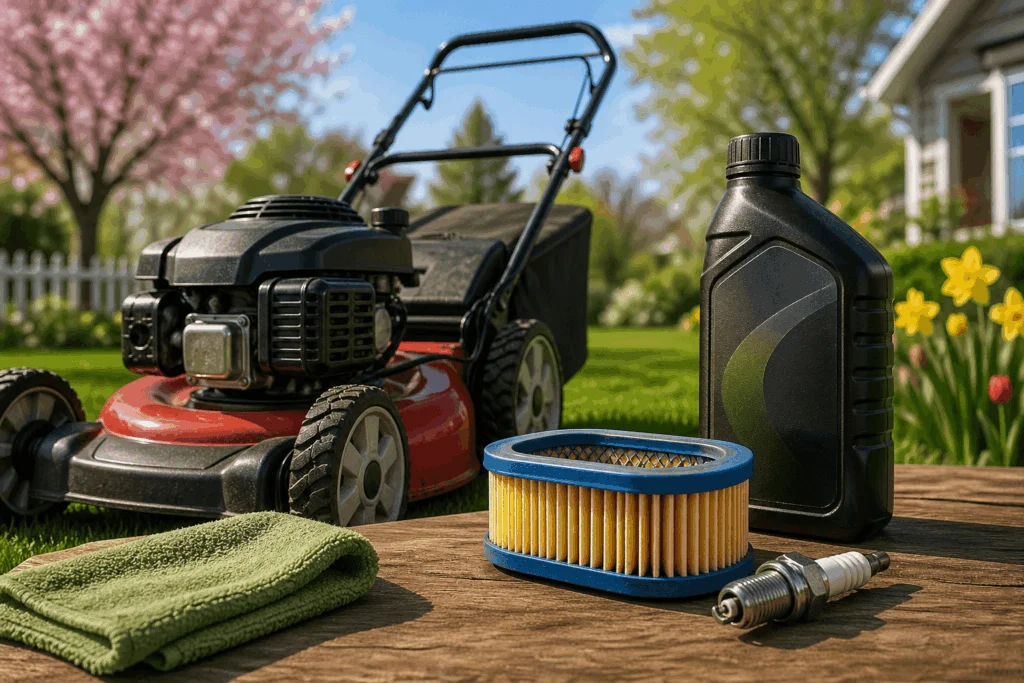
A proper spring lawn mower tune-up is the single best thing you can do for your mower before the cutting season begins. At Librandi Outdoor Power in Hayden, Idaho, we see a rush of mowers come through the shop every April and May with problems that could have been prevented by a quick pre-season service. This checklist covers the eight essential steps our factory trained technicians recommend for every mower, whether it is a walk-behind, self-propelled, or zero-turn.
Why a Spring Lawn Mower Tune-Up Matters
Your mower sat dormant through several months of cold North Idaho winter. During that time, oil breaks down, fuel degrades, and moisture can accumulate in the engine and deck. As a result, a spring lawn mower tune-up addresses all of these issues before they cause real damage or leave you stuck with a mower that will not start on the first warm weekend.
Step 1: Change the Engine Oil
First and foremost, old oil loses its ability to protect engine components. Drain the crankcase completely and refill with the manufacturer-recommended weight. Most walk-behind mowers use SAE 30 or 10W-30, but always check your owner’s manual to be sure. According to Briggs & Stratton, regular oil changes are the single most important maintenance step for small engine longevity. For riding mowers, verify the oil capacity and use a drain pan to catch the old oil for proper recycling.
Step 2: Replace or Clean the Air Filter
Next, a clogged air filter restricts airflow to the engine, reducing power and fuel efficiency. Paper filters should be replaced annually. In contrast, foam filters can be washed with warm soapy water, dried completely, and lightly re-oiled before reinstalling. As a result, a clean air filter can improve fuel economy by up to 10 percent.
Step 3: Install a Fresh Spark Plug
In addition, spark plugs are inexpensive and easy to replace. A new plug ensures reliable starting and clean combustion. Make sure to check the gap against your owner’s manual specifications before installing. In fact, a fouled or worn spark plug is one of the most common causes of hard starting after winter storage.
Step 4: Sharpen or Replace the Blade
A dull blade tears grass instead of cutting it cleanly, leaving your lawn vulnerable to disease and giving it a brown, ragged appearance. We recommend professional blade sharpening at least once per season. If the blade is bent, cracked, or excessively worn along the cutting edge, replace it entirely rather than trying to sharpen it back into shape.
Step 5: Drain Old Fuel and Start Fresh
Moreover, if you left fuel in the tank over winter without stabilizer, drain it and dispose of it properly. Old gasoline turns into a varnish-like residue that clogs carburetors, fuel lines, and jets. Therefore, refill with fresh fuel and consider adding a stabilizer if you do not mow on a strict weekly schedule. The Outdoor Power Equipment Institute recommends ethanol-free fuel as the best choice for small engines when available.
Step 6: Inspect the Drive Belt and Cables
For self-propelled and riding mowers, check the drive belt for cracks, fraying, or glazing. Specifically, a stretched or worn belt will slip under load and reduce ground speed. In addition, test the throttle and blade engagement cables to make sure they move freely and return to their resting position without sticking.
Step 7: Scrape and Clean the Mower Deck
Furthermore, grass buildup on the underside of the deck restricts airflow and reduces cut quality. Scrape off caked-on debris with a putty knife or deck scraper. As a result, a clean deck also helps prevent rust formation during the humid summer months. This is also a good time to inspect the deck for cracks or damage.
Step 8: Check Tire Pressure
Finally, uneven tire pressure causes an uneven cut. Check all tires with a low-pressure gauge and inflate to the PSI listed on the tire sidewall. This is especially important on riding mowers and zero-turns where even a small pressure difference between left and right tires creates a visible stripe pattern in the lawn.
When to Bring It to a Professional
However, if your mower will not start after fresh fuel and a new spark plug, or if you notice excessive vibration, smoke, or unusual noises, bring it in for a professional diagnostic. At Librandi Outdoor Power, our service department handles everything from basic tune-ups to complete engine rebuilds on all major mower brands. Our diagnostic fee is $40, and that amount applies toward the cost of repair if you choose to proceed.
In summary, a spring lawn mower tune-up typically takes less than an hour for a homeowner doing it themselves, or you can drop it off and let us handle it. Either way, spending a little time now saves a lot of frustration once the grass starts growing.
Ready to get your mower serviced? Call us at (208) 772-4556 or fill out our contact form to schedule a spring tune-up.