
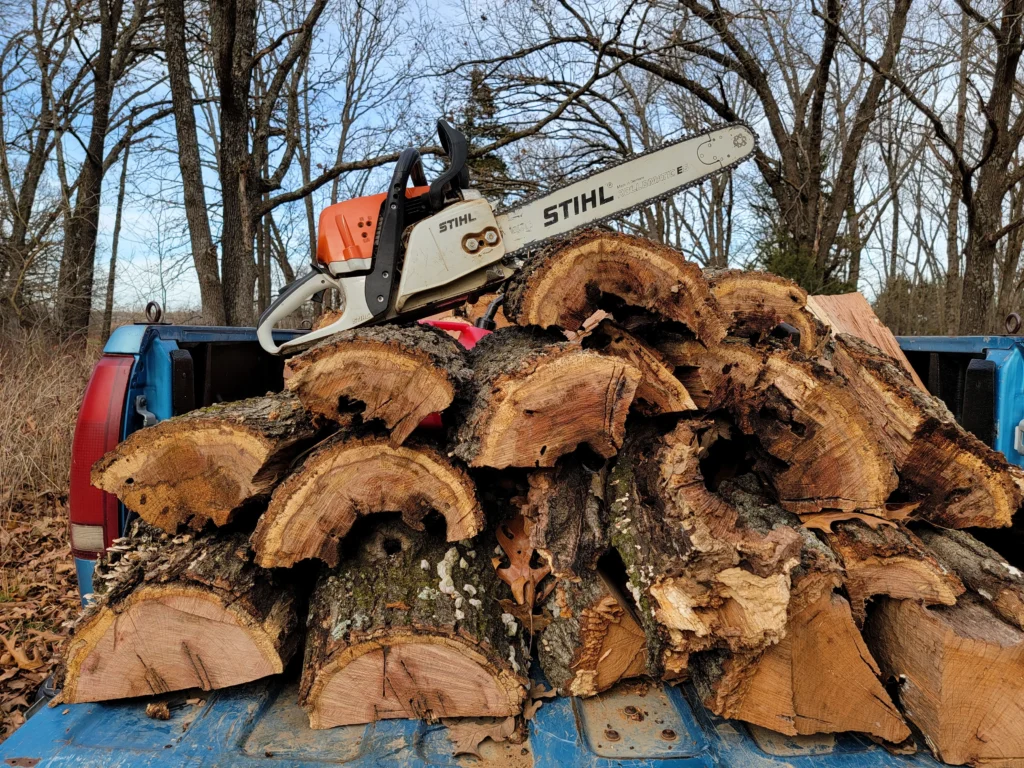
Around here, firewood is not a hobby. A lot of homes in Hayden, Rathdrum, Athol, and up the Silver Valley heat with wood all winter, and the difference between a warm January and a smoky, frustrating one gets decided months earlier, back when the wood was cut, split, and stacked. Late summer is exactly that moment. Here is how to get your winter wood in the right way: what to cut, how dry it has to be, what the Forest Service will let you take for free, and how to keep all your fingers while you do it.
The 20 percent rule runs the whole show
A freshly cut tree is roughly half water by weight. Burn it like that and most of your fire’s energy goes into boiling water instead of heating your house, and the cool, smoky burn paints the inside of your chimney with creosote, which is how chimney fires start. Properly seasoned firewood is down around 20 percent moisture. That single number is the whole game.
You do not have to guess. A moisture meter costs about as much as a couple of chain files, and you use it by splitting a piece open and testing the fresh face, not the weathered outside. No meter? Seasoned wood shows spider-web cracks in the end grain, feels light for its size, and gives a sharp crack instead of a dull thud when you knock two pieces together.
Wood cut now is mostly next winter’s wood, with one big exception
Honesty first: green wood split and stacked in August will not be truly ready for December. Most species need six to nine months minimum in the stack, and a full year is better. Cutting now puts you in great shape for next season, and that is how the reliable wood-heat households run: always a year ahead.
The exception is the reason August still fills the truck. Standing dead timber, the beetle-killed lodgepole and fire-killed snags this region has plenty of, has often been drying on the stump for years. A moisture meter reading on a split round will tell you in ten seconds whether you have found this winter’s wood or next winter’s. Dead standing larch and lodgepole regularly test dry enough to burn the same season.
Twelve free cords are sitting in the Panhandle forests
If you have a truck and a saw, your fuel bill is mostly effort. The Idaho Panhandle National Forests issue personal-use firewood permits for free, good for up to 12 cords per household per year, and you no longer have to drive to a ranger station: permits are available through the Forest Service’s online E-Permit system. A cord, for the record, is a tight stack four feet high, four feet wide, and eight feet long. Twelve of them will carry most households through the coldest winter this region can produce.
The permit generally covers downed timber and standing dead trees in allowed areas, and each ranger district sets its own rules about where you can cut, so check the district map before you head up. Roads matter more than distance: a legal tree fifty feet from a solid road beats a better tree half a mile up a skid trail every time.
Cutting day: the safety part is not optional
Firewood cutting is the most dangerous thing most homeowners do all year, and the injuries are depressingly consistent: kickback to the face and shoulder, cuts to the left leg, and crushed feet. The equipment that prevents them is cheap compared to any one of them:
- Chaps. Chainsaw chaps stop a spinning chain by jamming the sprocket with fibers. They turn a surgery into a ruined pair of pants.
- Eyes and ears. A saw runs well past the volume that causes permanent hearing loss, and it throws chips constantly.
- Boots and gloves. Rounds roll. Steel toes are for the moment one rolls onto your foot.
- A sharp chain. A sharp chain pulls itself through the cut with big, ribbon-like chips. A dull chain makes powder, makes you push, and pushing is where kickback and bad decisions come from.
Watch the upper corner of the bar tip: that is the kickback zone, and it belongs away from everything you are cutting. Never cut alone if you can help it, and fell nothing you are not certain about. A standing dead snag that hangs up in another tree is a problem worth walking away from.
Split soon, stack smart
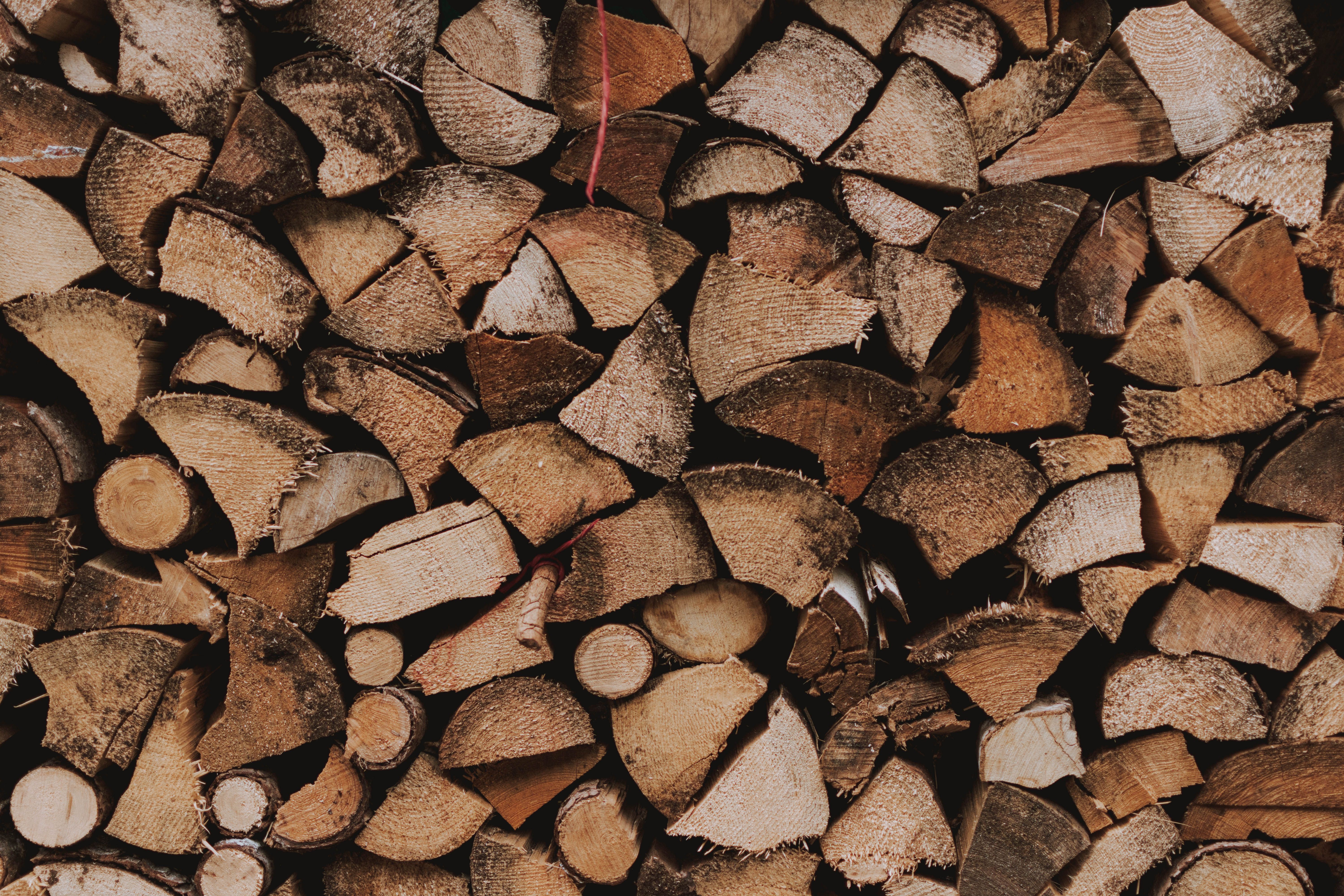
Wood dries through its open grain, so a split round seasons several times faster than a whole one. Split it while it is green if you can, smaller than you think you need, and stack it where the sun and the prevailing wind can work: single rows, off the ground on rails or pallets, top covered against rain but sides left open. A tarp draped over the whole pile traps moisture and defeats the purpose. Give the stack until it tests near 20 percent, and you will burn hotter, cleaner, and safer, with a chimney that stays clean through the season.
We will get your saw ready
Before you head up the mountain, bring the saw by the shop. We sharpen chains while you wait, stock bars, chains, chaps, and the rest of the safety gear, and if the saw itself has been sitting since spring we will go through the fuel system, filter, and bar so it starts on the landing instead of in the parking lot. Planning to split by machine? We can set you up with a log splitter and service the one you have. Stop in and get your firewood season started right.