
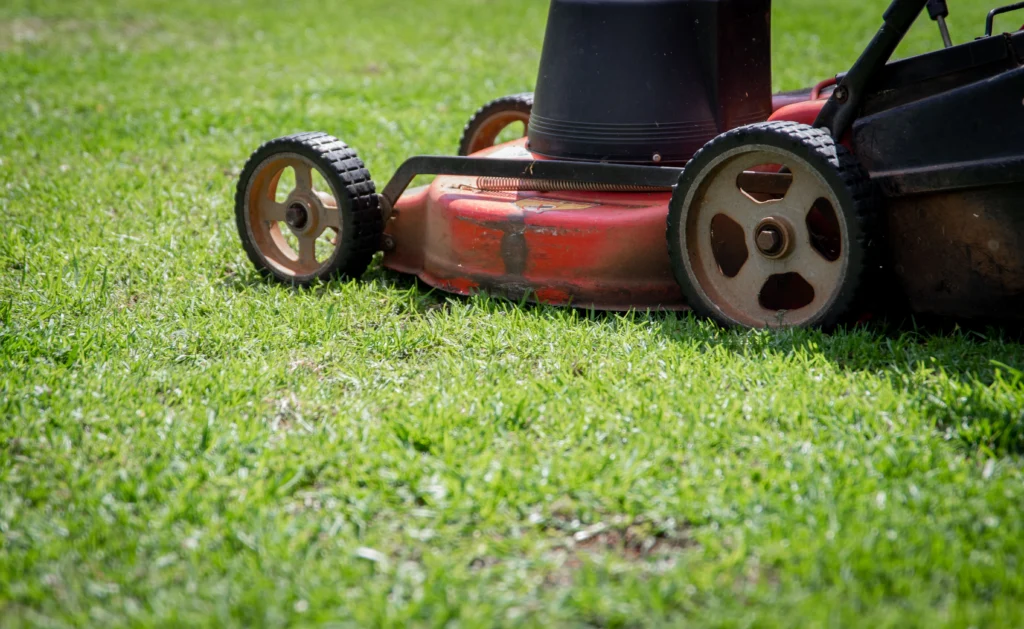
If your mower cranks but won’t stay running, your chainsaw bogs down under a cut, or your trimmer starts one weekend and refuses the next, the odds are very good the problem is not the engine. It’s the fuel. At the service bench, bad gas is the single most common reason a piece of outdoor power equipment comes in the door, and almost all of it is preventable. Here is exactly what fuel does to a small engine, and how to stop it from costing you a carburetor.
Why gasoline is the number one killer of small engines
Two things are working against the fuel in your shed, and both get worse the longer it sits.
The first is that gasoline simply goes stale. It starts to oxidize and lose combustibility in as little as thirty days. The manufacturers are blunt about this: Briggs & Stratton says gas “begins to degrade in as little as 30 days,” Honda warns that fuel problems “may occur in less than 30 days,” and STIHL tells owners not to use fuel older than sixty days, and preferably no older than thirty, even with a stabilizer added. As it degrades it leaves behind gum and varnish, and those deposits settle in the tiny passages of a carburetor, where a clog the width of a hair is enough to stop the engine.
The second problem is ethanol. Nearly all pump gas is E10, meaning up to ten percent ethanol, and ethanol is hygroscopic: it actively pulls water vapor out of the air and into your fuel. E10 can only hold about three-quarters of an ounce of water per gallon before it “phase separates.” When that happens, a heavy layer of ethanol and water drops to the bottom of the tank, which is exactly where the fuel pickup sits. The engine tries to run on water, and the same mixture corrodes the metal in the fuel system. Ethanol is also hard on the materials small engines are built from: it attacks aluminum carburetor castings, brass parts, plastic floats, and rubber fuel lines and diaphragms.
Never put E15 in your equipment. It’s illegal, and it’s spreading.
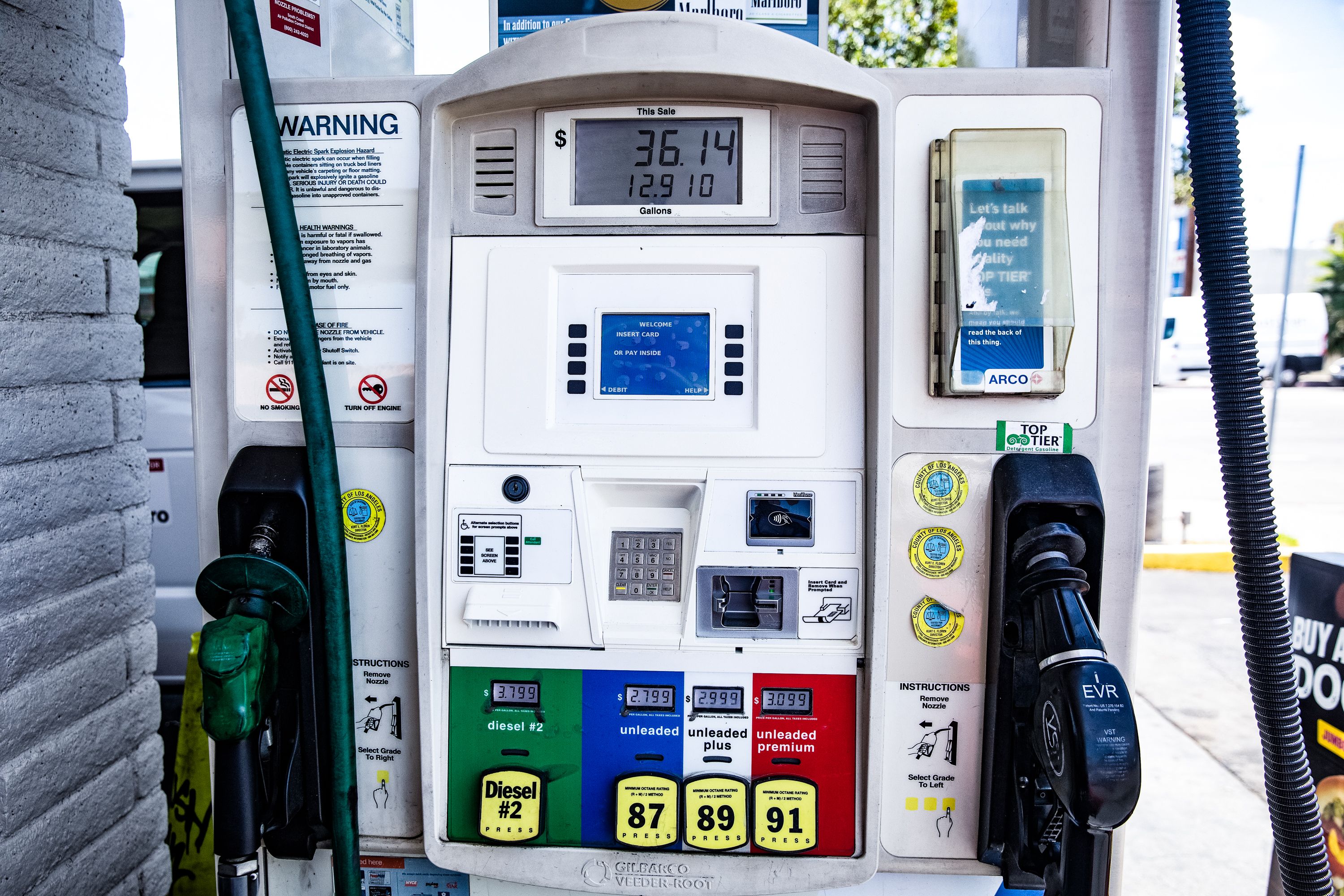
You have probably noticed pumps offering a cheaper blend labeled E15, sometimes marketed as “Unleaded 88.” Putting it in your mower, saw, trimmer, or blower is against federal law. The EPA’s misfueling rule allows blends above ten percent ethanol only in model-year 2001 and newer cars and light trucks. Outdoor power equipment is specifically excluded, and using E15 in it also voids your manufacturer’s warranty. A Department of Energy study found E15 made small engines run hotter, engage clutches on their own, and fail.
This matters more every year because E15 is becoming harder to avoid. In 2025 the EPA cleared year-round E15 sales in several Midwest states, and Congress has been working toward nationwide year-round availability. That is why the outdoor power industry runs its “Look Before You Pump” campaign, with the simple red-hand symbol: fine on E10, stop on anything higher. Surveys behind that campaign found that roughly seven in ten people did not know the higher blends are prohibited in their equipment, and about a quarter admitted to filling their gear with whatever was already in the car. Read the pump before the nozzle goes in.
What the manufacturers actually recommend
The advice splits along the kind of engine you own, and it is worth knowing both halves.
For four-stroke equipment like most mowers and generators, Briggs & Stratton recommends fresh fuel of at least 87 octane with a fuel stabilizer added, and here is the part people get backward: for storage, they say to leave the tank full of treated fuel, not empty. An empty tank and carburetor draw in moisture and grow the rust that clogs a carb. After you add stabilizer, run the engine for a few minutes so the treated fuel actually reaches the carburetor.
For two-stroke equipment like chainsaws, trimmers, and blowers, the manufacturers increasingly point you at canned, ethanol-free premixed fuel. STIHL sells MotoMix and Husqvarna sells its XP+ premix, both ethanol-free and both rated to stay usable for around two years, versus thirty days for pump gas. Yes, a quart costs several dollars where a gallon of pump gas costs less. But a quart of engineered fuel, or even a ten-dollar bottle of stabilizer in your regular gas, is cheap insurance against a repair bill.
The math that makes this easy
Here is the trade in plain numbers. A carburetor that has gummed up from stale or ethanol-laden fuel is not a quick fix. A professional cleaning runs somewhere in the range of forty to a hundred and twenty dollars depending on the machine, and a full rebuild or replacement climbs from there, because deep-cleaning those passages is slow, careful labor. Industry mechanics have reported that on the order of forty percent of the small engines they repair are ethanol-damaged, and marine shops put fuel-related work even higher.
Now weigh that against prevention: a bottle of stabilizer, a can of ethanol-free premix, and the habit of not letting gas sit for months. Six to ten dollars of the right fuel and a few minutes of attention is the whole defense against a repair that costs ten to thirty times as much.
The North Idaho advantage: real ethanol-free gas is close by
Here is some good news for anyone in the Hayden, Coeur d’Alene, Post Falls, and Rathdrum area. Idaho has no state ethanol mandate, which is why true ethanol-free gasoline is far easier to find here than in mandate states like neighboring Washington and Oregon. Ethanol-free “clear” premium, usually 91 octane, is sold at a number of area stations. The Maverik at 5525 N Government Way in Coeur d’Alene, for example, lists an Ethanol Free 91 grade at the pump. Availability varies location to location, so the rule stands: look at the pump and confirm the grade before you fill.
If you run a chainsaw or trimmer you only use a few times a season, ethanol-free fuel or canned premix is the single best thing you can do for it. If you burn through fuel every week in the mowing season, E10 is fine as long as it’s fresh and stabilized.
Already gummed up? We can help.
If your equipment is already hard to start, surging, or dying under load, the fuel system is the first place we look, and a proper carburetor service usually brings it back to life. Bring it into the shop and we’ll diagnose it, clean or rebuild the carburetor, and get you running before the next big job. And if you want to prevent the problem in the first place, we stock the stabilizers and ethanol-free premixed fuels that keep small engines healthy through the North Idaho seasons. Stop in, and we’ll set you up with the right fuel for whatever you run.